

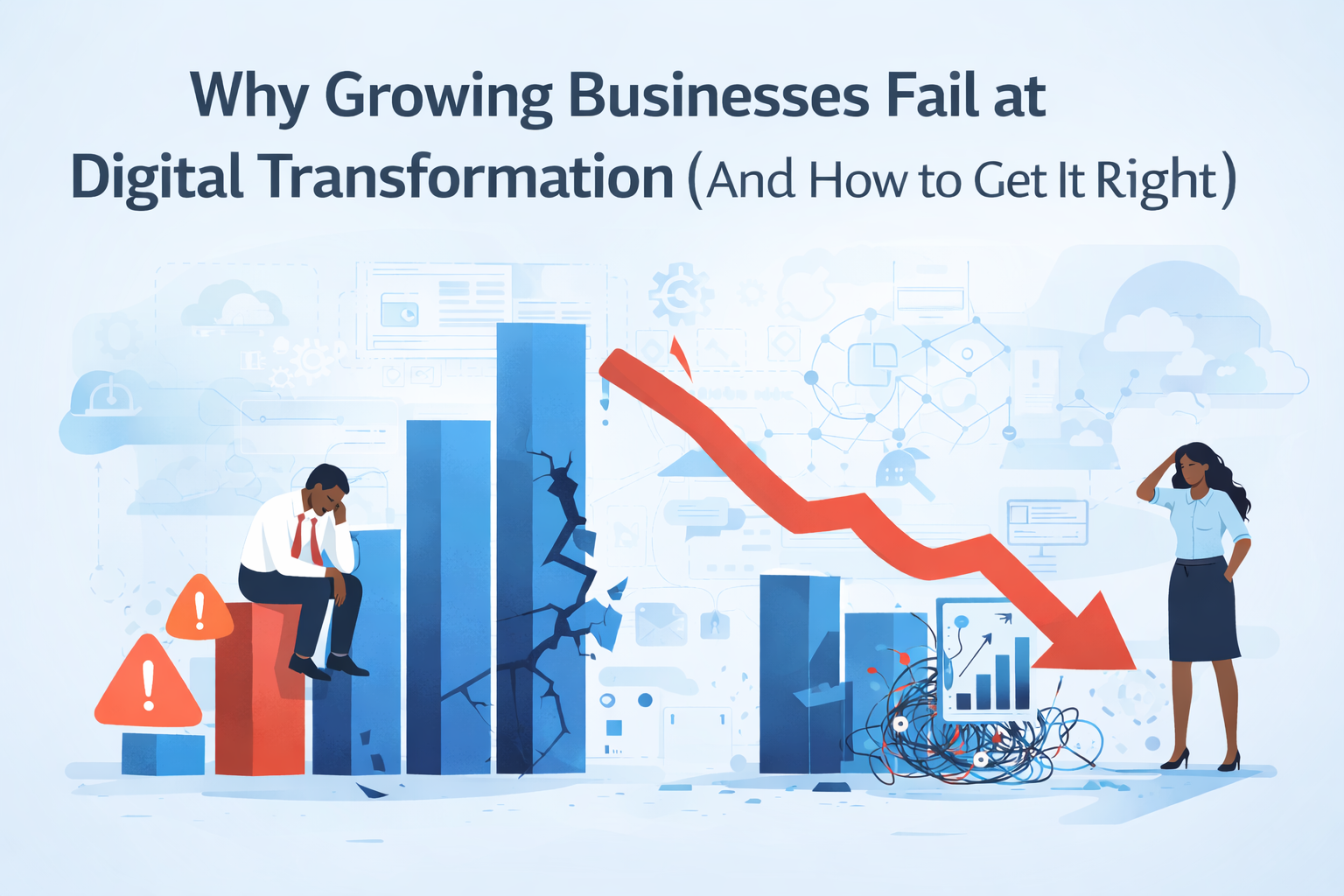
Digital transformation promises efficiency, scalability, and competitive advantage. Yet for many growing businesses, digital initiatives fall short of expectations. Projects stall, systems become difficult to maintain, and teams struggle to see real business value.
Understanding why digital transformation fails is the first step toward doing it right.
Digital Transformation Is Not Just About Technology
One of the most common misconceptions is that digital transformation is a technology upgrade. In reality, it is a business transformation supported by technology.
When organizations focus only on tools and platforms, they often overlook:
- Business processes
- Team readiness
- Long-term scalability
- Clear ownership and accountability
Without aligning technology to real business needs, transformation efforts lose direction.
Common Reasons Digital Initiatives Fail
1. Lack of Clear Business Objectives
Many projects start with vague goals like “go digital” or “modernize systems.” Without measurable objectives, success becomes difficult to define and even harder to achieve.
2. Poor Technology Decisions
Choosing technologies based on trends rather than business requirements leads to systems that are expensive, complex, and hard to scale.
3. No Execution Roadmap
A strategy without a phased execution plan often results in delays, cost overruns, and incomplete solutions.
4. Ignoring Scalability Early
Systems built only for today’s needs struggle when user numbers, data, or integrations increase.
5. Underestimating Change Management
Digital transformation impacts people as much as systems. Without proper onboarding and adoption, even the best solutions fail.
How to Get Digital Transformation Right
Start with Business Problems, Not Tools
Successful transformation begins by identifying real operational challenges and customer pain points.
Build in Phases
Breaking delivery into manageable phases allows teams to validate assumptions, reduce risk, and adapt quickly.
Use Software Advisory to Guide Decisions
Expert advisory helps businesses:
- Choose the right architecture
- Avoid unnecessary complexity
- Plan for future growth
- Reduce long-term technical debt
Treat Software as a Product
Digital systems should evolve continuously, guided by data, user feedback, and business priorities.
The Importance of Long-Term Thinking
Growing businesses often focus on short-term wins. However, digital systems built without long-term thinking become obstacles instead of enablers.
Planning for scalability, security, and integration from the start ensures that systems grow alongside the business.
Turning Digital Efforts into Real Business Value
When done right, digital transformation leads to:
- Improved efficiency and automation
- Better customer experiences
- Faster decision-making through data
- Reduced operational costs
- Stronger competitive positioning
The difference lies not in the tools used, but in the strategy, execution, and guidance behind them.
Final Thoughts
Digital transformation is not a one-time project — it is a continuous journey. Growing businesses that succeed are those that combine clear business objectives, disciplined execution, and trusted software advisory.
Getting it right today sets the foundation for sustainable growth tomorrow.
Quantum Vision partners with growing businesses to navigate digital transformation with clarity, confidence, and scalable technology solutions.